A classroom where every child can thrive
Khushishala is built on a simple hope: that every child can experience a classroom that nurtures them to learn and grow.
Through engaging training and classroom activities, Khushishala equips teachers with the skills, practices, and support they need to help every child thrive.
In Khushishala classrooms, children learn to notice what's happening inside their bodies, minds, and hearts. They learn to express their ideas and perspectives, and be gentle with themselves when they struggle. They begin to ask a question that is critical to leadership: what matters to me, and how do I want to act on it?
These ideas live in stories, activities, and real projects— small acts of purpose practised early, building the skills needed to activate their full potential.
The shift shows up in ordinary ways: calmer classroom environments, children speaking up more, richer student-teacher relationships, and increased school participation.
Leading it all is their teacher, equipped to help children build the skills for a meaningful, flourishing life.
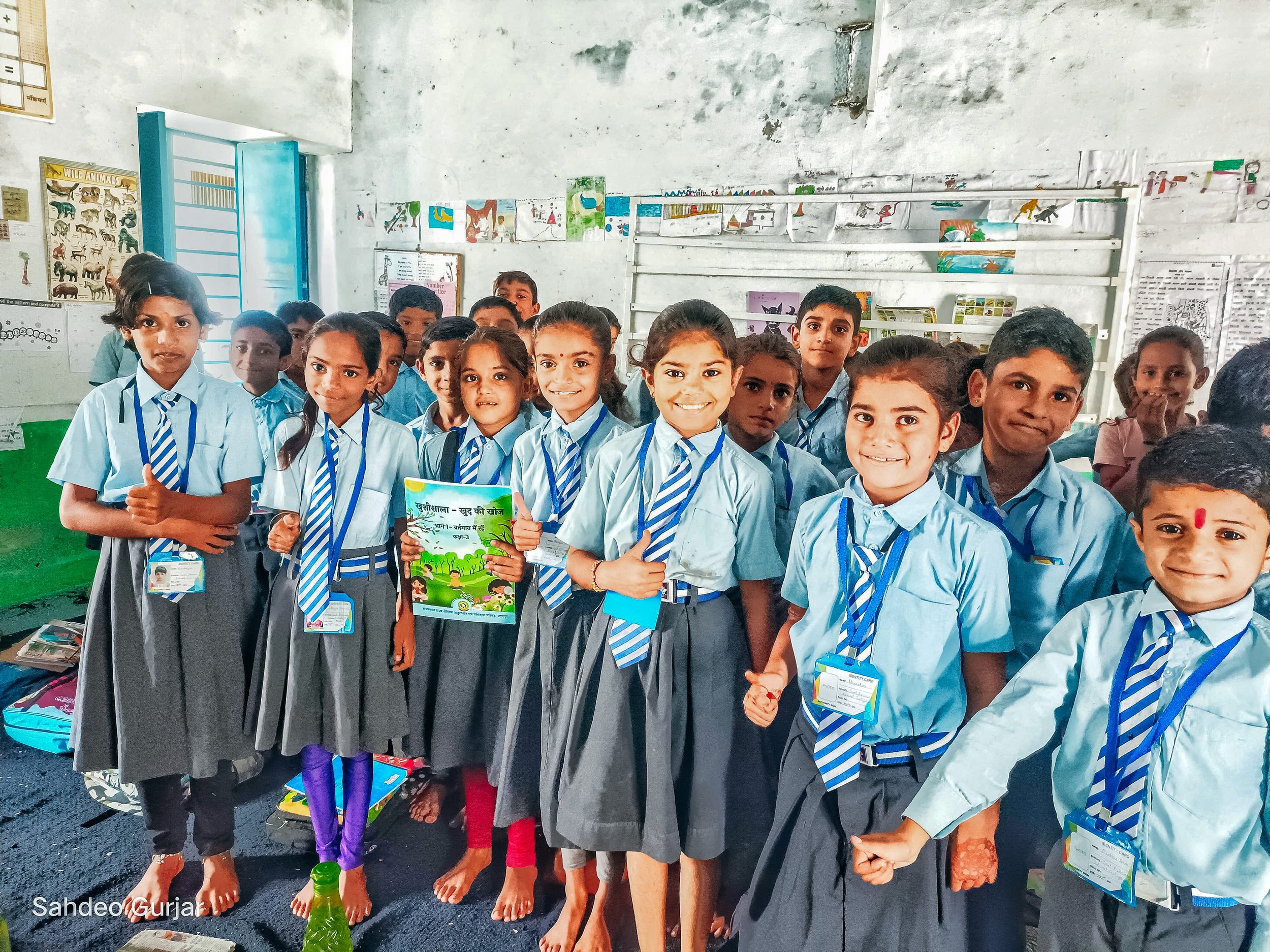
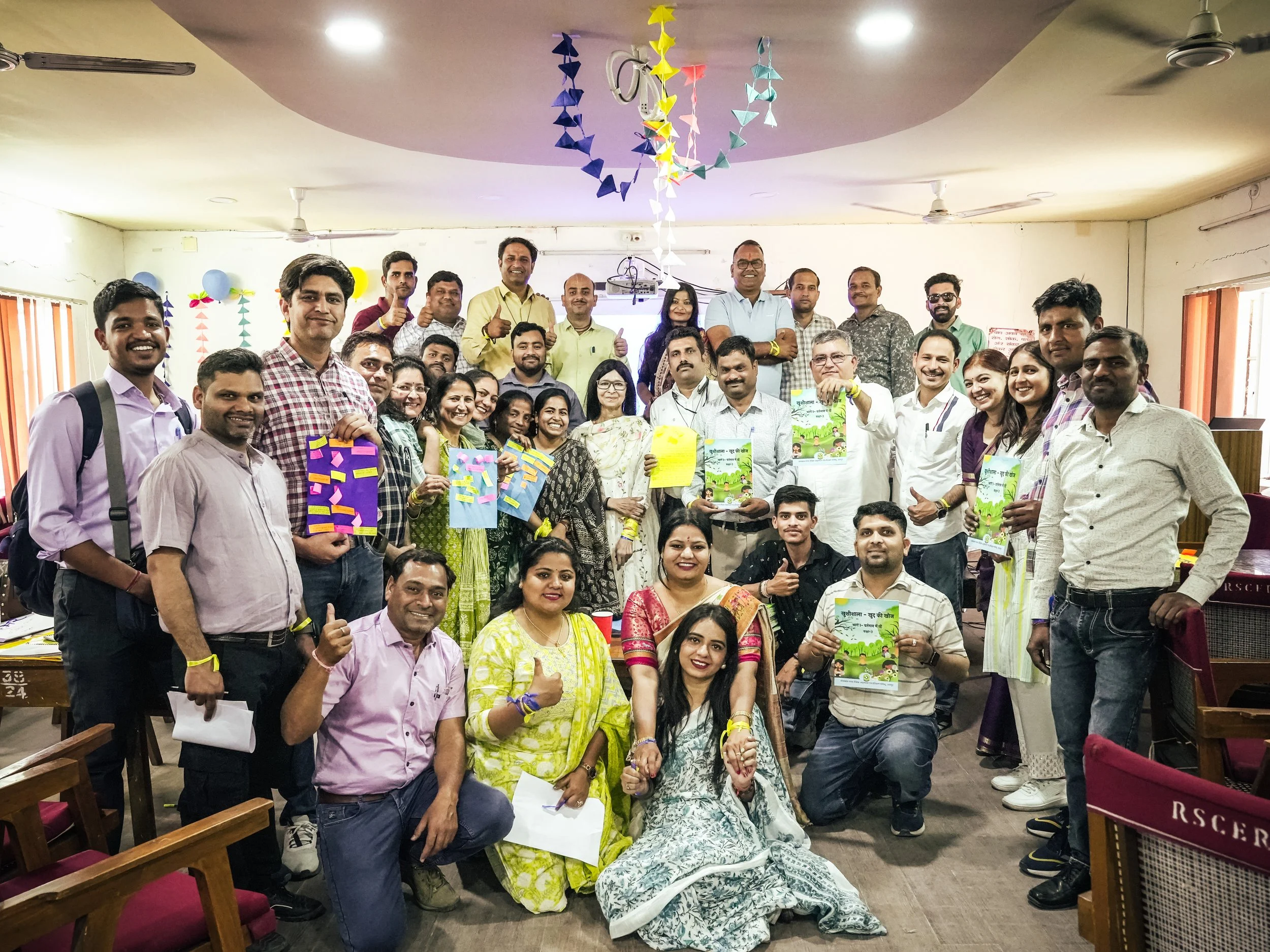
Led by teachers who practise what they teach
The Khushishala DifferenceAll too often, children’s wellbeing is a separate mandate from supporting teachers. Khushishala sees teachers as central, and begins with equipping them with wellbeing insights and skills that they can model in the classroom. And they do precisely this: 91% of teachers take wellbeing-related actions post-training, which brings safety, creativity, and inspiration to their class.
Inside the activities
Khushishala is grounded in Acceptance and Commitment Training (ACT) and Cognitively-Based Compassion Training (CBCT), organized around three pillars:
Be present: noticing thoughts and sensations as they arise, rather than being run by them
Have compassion: meeting one's own struggles with the kindness one would offer a friend
Do what matters: using personal values as a compass for everyday choices
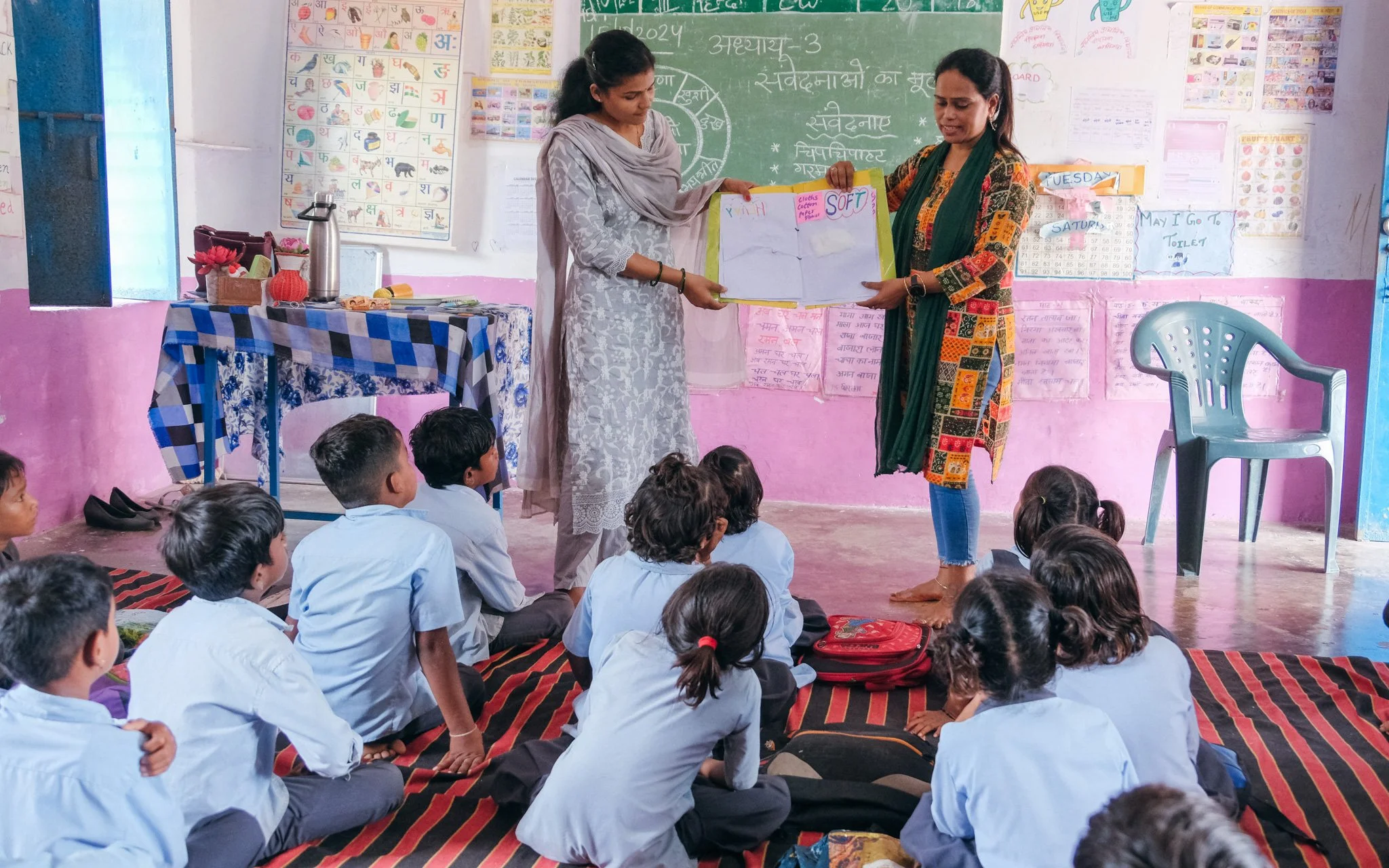
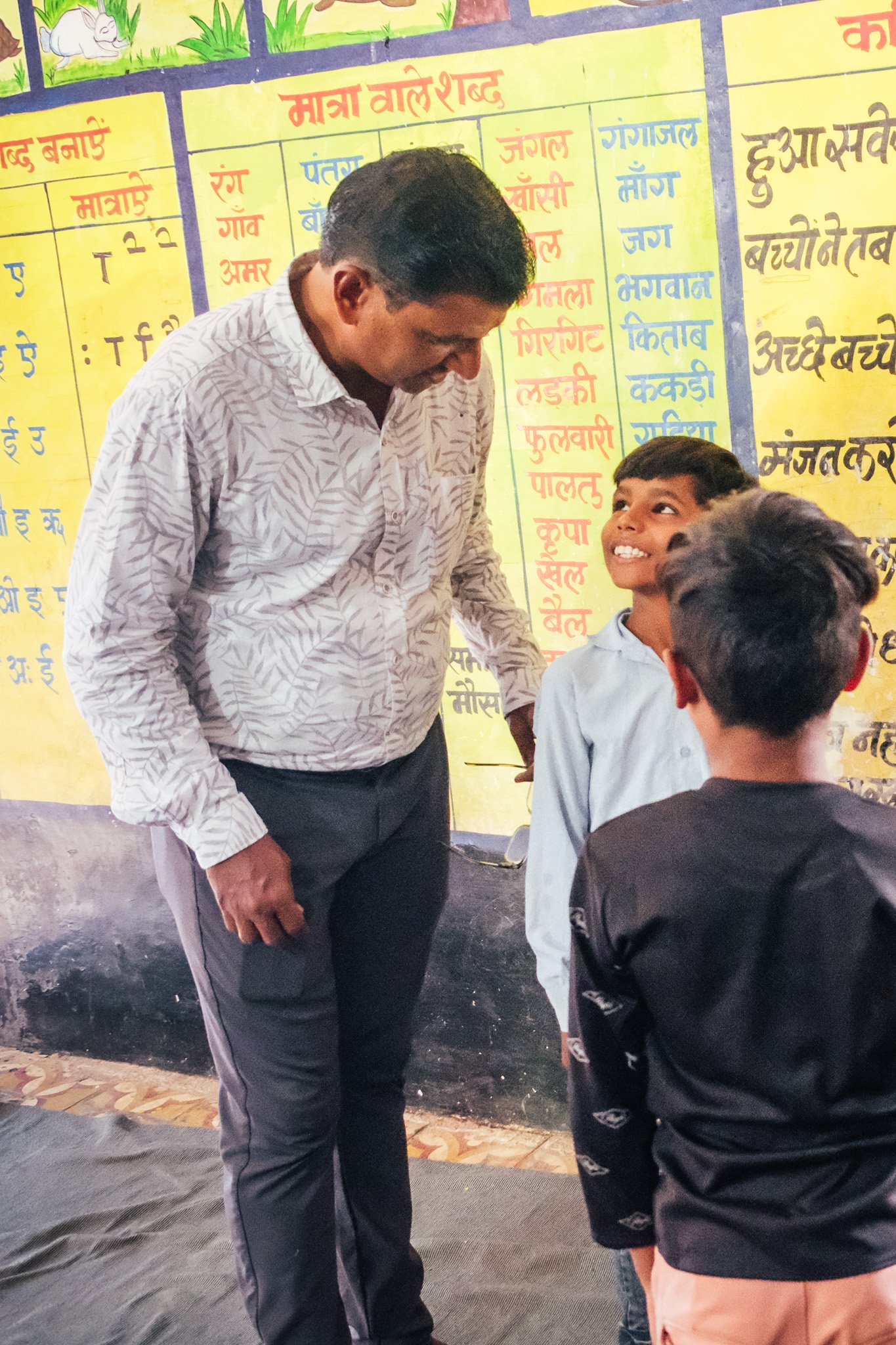
These pillars come alive through a six-unit teacher handbook for children ages 6–11. A facilitation guide, not a textbook, it moves from body awareness and noticing thoughts, to self-compassion, interdependence, personal values, and finally a real project children design and carry out in their school or community.
Every idea is taught through story and metaphor rooted in local life, so a teacher can genuinely make their own, and children can connect to it with ease and excitement.